
Toddler Room
Big feelings. Growing independence.
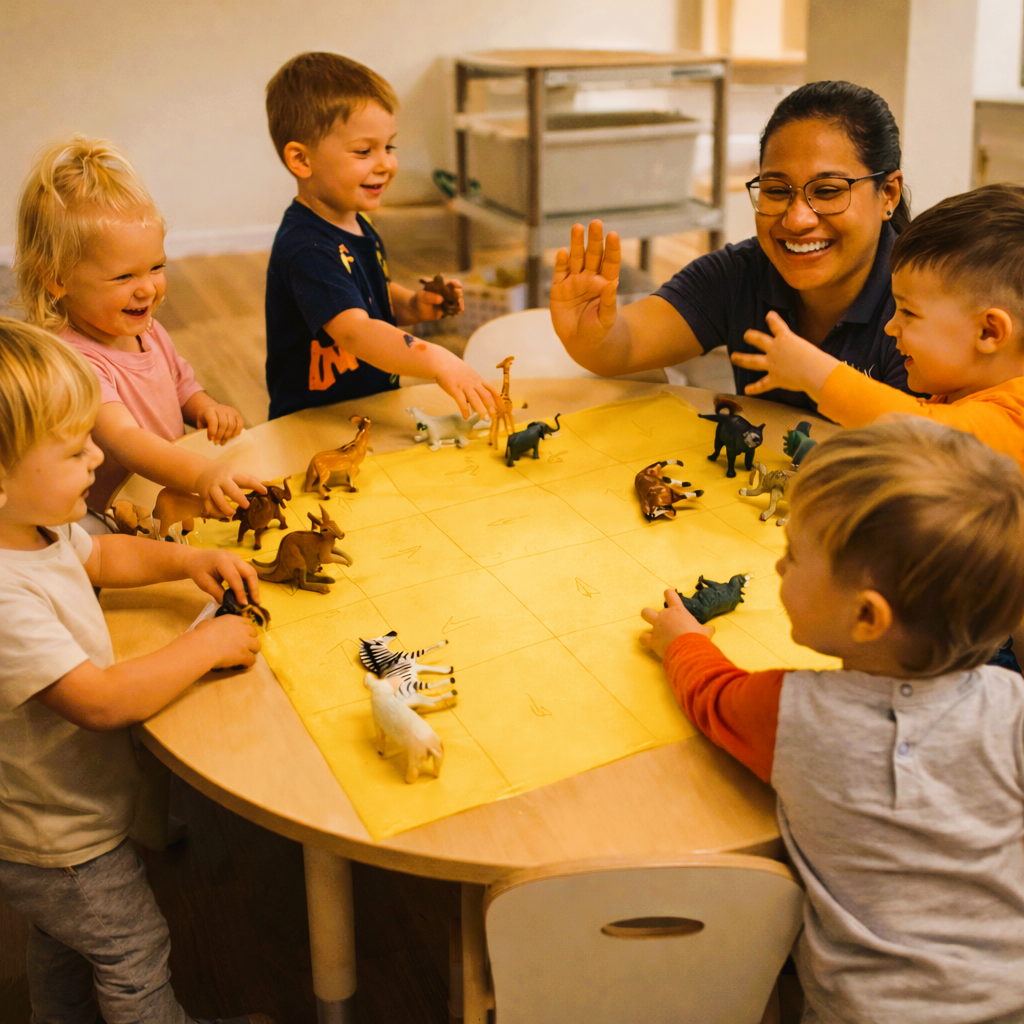
Toddlers are building language, agency, routines and relationships all at once. BEL combines clear expectations, calm co-regulation and purposeful play so children can try, recover and participate with growing confidence.
What this means in practice
Support for the moments that matter most.
Toddler learning is visible in the everyday: a transition, a shared toy, a new word, a problem solved or a feeling expressed with support.
Co-regulation first
Educators stay close, name feelings and offer simple strategies before expecting independent regulation.
Language for real needs
Children are supported to express needs, ideas and boundaries through words, gestures and visual cues.
Growing independence
Routines provide safe opportunities to choose, help, persist and do more for themselves.
Social confidence
Educators model joining play, waiting, negotiating and repairing small conflicts.
Thinking in action
Open-ended experiences invite children to remember, plan, focus and solve practical problems.
Specific family updates
Families hear what helped, what changed and what the team may support next.
Capabilities children build
Growth that matters now—and through the transition to school.
Growing capability
Support for big feelings, bold ideas and new independence.
Toddler learning moves quickly. Educators balance reassurance with meaningful choices, language-rich interaction and room to try.
Co-regulation in real moments
Educators name feelings, offer calm support and help children practise ways to pause, recover and reconnect.
Choice and independence
Everyday routines and play give children achievable opportunities to choose, participate and do more for themselves.
Language that is useful
Conversation, stories, songs and modelling help children express needs, build vocabulary and understand one another.
Social problem-solving
Educators coach turn-taking, shared play and repair after conflict instead of expecting toddlers to manage complex moments alone.
Curiosity and planning
Open-ended experiences invite children to test an idea, remember what happened and try a different approach.
Continuity with families
Updates focus on emerging strengths, current interests and useful next steps so families can see the learning behind the day.
Bring your toddler’s routines, words and comfort cues into the conversation.
A tour is the best place to discuss big feelings, transitions, toileting, language, independence and the kinds of support your child responds to.